China’s LineShine Supercomputer Named Fastest in the World, Topping U.S.-Built El Capitan
06/29/2026 / By Chase Codewell
China’s LineShine supercomputer has been named the world’s fastest, surpassing the U.S.-built El Capitan in the latest TOP500 rankings.
The announcement was made Tuesday, June 23, at the International Supercomputing Conference in Hamburg, Germany. It marks the first time since 2017 that a Chinese machine has held the top spot on the twice-yearly list. [1][2]
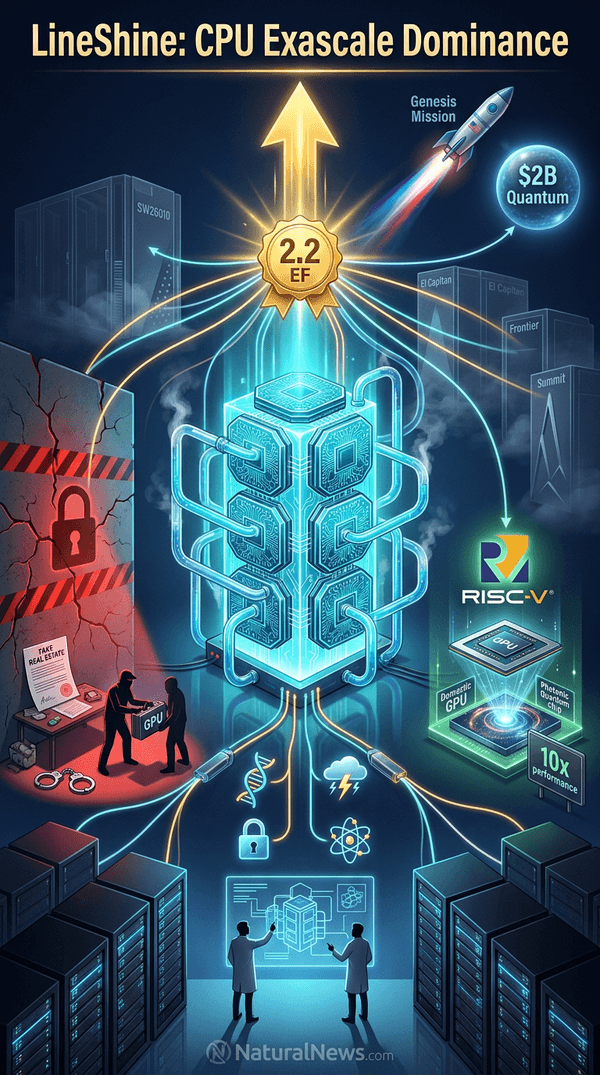
Supercomputers are used for complex scientific tasks including climate modeling, human brain simulations and cryptography, according to officials. LineShine, developed by the National Supercomputing Center in Shenzhen, achieved a performance of nearly 2.2 quintillion calculations per second on a key benchmark – outperforming El Capitan by more than 20%. [2]
Technical Performance and Design
LineShine stands out for relying entirely on standard central processing units (CPUs), unlike most leading supercomputers that use graphics processing units (GPUs) for parallel processing. According to TOP500 co-founder and Turing Award winner Jack Dongarra, “This is the first time a computer with only CPUs has reached exascale,” referring to the milestone of performing at least 1 quintillion calculations per second. [2]
The CPU-only architecture sets LineShine apart from systems like El Capitan and the former U.S. leader Frontier, both of which depend on GPU accelerators. Dongarra noted that achieving exascale performance without GPUs demonstrates China’s ability to innovate under technological constraints. [2]
Impact on U.S.-China Technology Rivalry
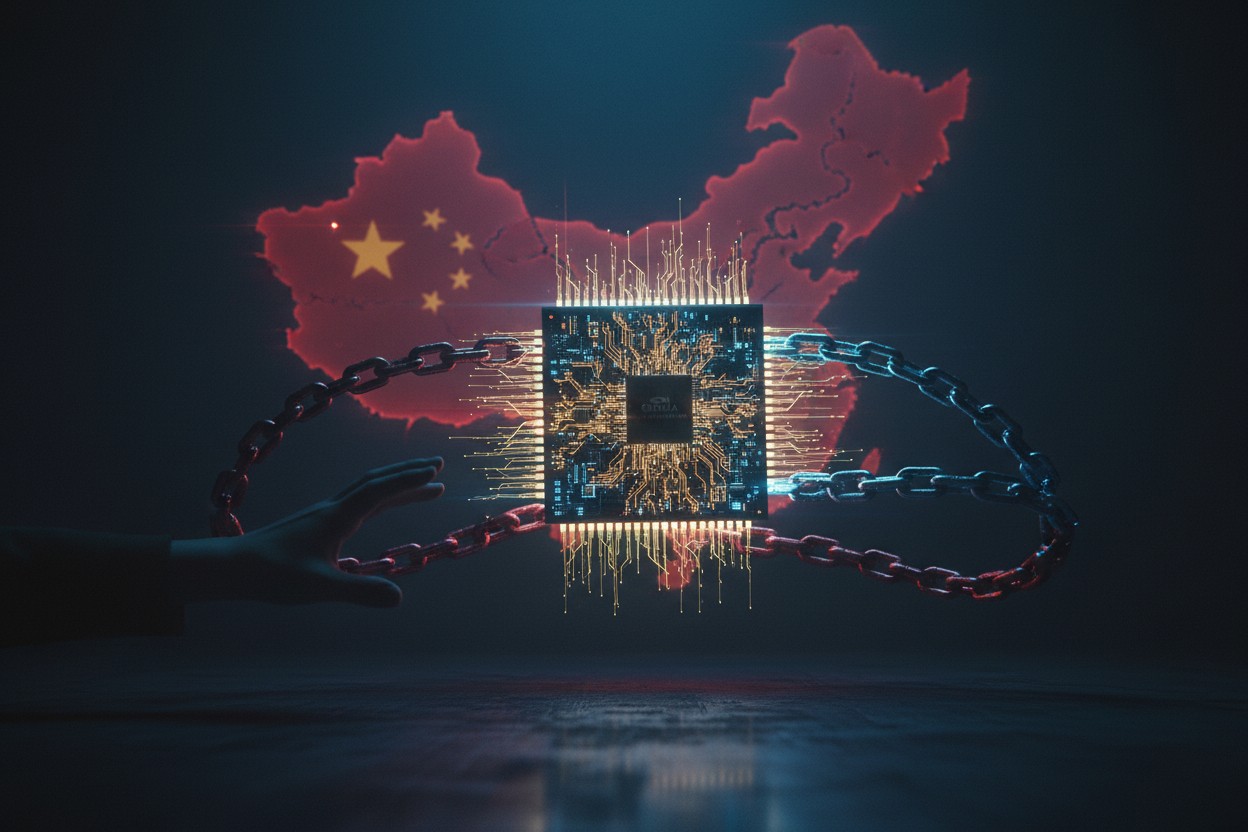
GPUs are critical to advanced artificial intelligence (AI) systems and have become a focal point of tensions between Washington and Beijing. The Trump administration imposed export restrictions on advanced chips to slow China’s progress in supercomputing and AI. Despite these measures, Dongarra said, “China can adapt to develop its own version of technology as good as – or maybe even better than – existing technology, despite U.S. export controls.” [2]
Federal authorities have also uncovered efforts to bypass those controls. In November 2025, the Department of Justice charged four individuals in a $3.9 million scheme to smuggle advanced Nvidia AI chips to China through a fake Florida real estate company. [3]
Meanwhile, Beijing has restricted overseas travel for leading AI researchers and engineers to prevent talent drain. [4] Earlier, the U.S. launched the “Genesis Mission” AI initiative in November 2025, which the White House compared to the Manhattan Project, and committed $2 billion to quantum computing in May 2026 to maintain technological leadership. [5][6]
Historical Context of Supercomputing Rankings
China’s previous top-ranked supercomputer, Sunway TaihuLight, held the No. 1 spot from June 2016 to November 2017. That system was notable for using no U.S.-made chips, relying instead on domestically produced microprocessors. [7] The U.S. regained the lead in 2018 with Summit, followed by Frontier and then El Capitan, which had held the top position since November 2024.
The TOP500 list, published twice yearly, is a widely cited benchmark in high-performance computing. LineShine’s return to the top ends a nine-year gap for China since Sunway TaihuLight’s reign. [1]
Academic collaborations between U.S. and Chinese institutions have also faced strain. Texas A&M University ended a climate research partnership with a Chinese laboratory in 2022, citing payment defaults. [8]
Conclusion
LineShine’s achievement underscores China’s ability to advance in supercomputing despite U.S. export control measures. The milestone may influence future technology policy and investment decisions in both countries. Experts continue to monitor the implications for scientific research and national security, as supercomputing capabilities are central to AI development, cryptography and military applications. [2]
As the U.S. and China deepen their competition, the energy and environmental costs of powering massive data centers are also drawing attention. [9] The LineShine milestone reaffirms that export controls, while intended to slow China’s progress, have not prevented the country from developing systems that compete at the highest level.
References
- YourNews.com. “China Reclaims World’s Fastest Supercomputer Ranking With LineShine System”. YourNews.com. June 23, 2026.
- RT. “China seizes global supercomputing crown”. RT. June 24, 2026.
- NaturalNews.com. “Four charged in $3.9 million scheme to smuggle advanced Nvidia AI chips to China through fake Florida real estate company”. NaturalNews.com. November 21, 2025.
- RT. “China restricts travel for AI talent – Bloomberg”. RT. May 26, 2026.
- YourNews.com. “U.S. Commits $2 Billion to Quantum Computing Push Led by IBM”. YourNews.com. May 21, 2026.
- NaturalNews.com. “Trump launches ‘Genesis Mission’ AI initiative, compares it to Manhattan Project”. NaturalNews.com. November 30, 2025.
- NaturalNews.com. “Milestone: China builds the world’s fastest supercomputer and did so without U.S. chips”. NaturalNews.com. June 28, 2016.
- NaturalNews.com. “Texas A&M ends climate research partnership with Chinese university as tense Washington-Beijing relations persist”. NaturalNews.com. August 24, 2022.
- YourNews.com. “The AI Cold War: How the U.S.-China Race Could Impact Energy, Water, and Consumers”. YourNews.com. June 19, 2026.
Explainer Infographic
Submit a correction >>
Tagged Under:
AI chips, breakthrough, central processing units, China, computing, cyber war, El Capitan, exascale, future science, future tech, Glitch, graphics processing units, information technology, inventions, Jack Dongarra, LineShine, National Supercomputing Center, progress, Sunway TaihuLight, supercomputer
This article may contain statements that reflect the opinion of the author
RECENT NEWS & ARTICLES