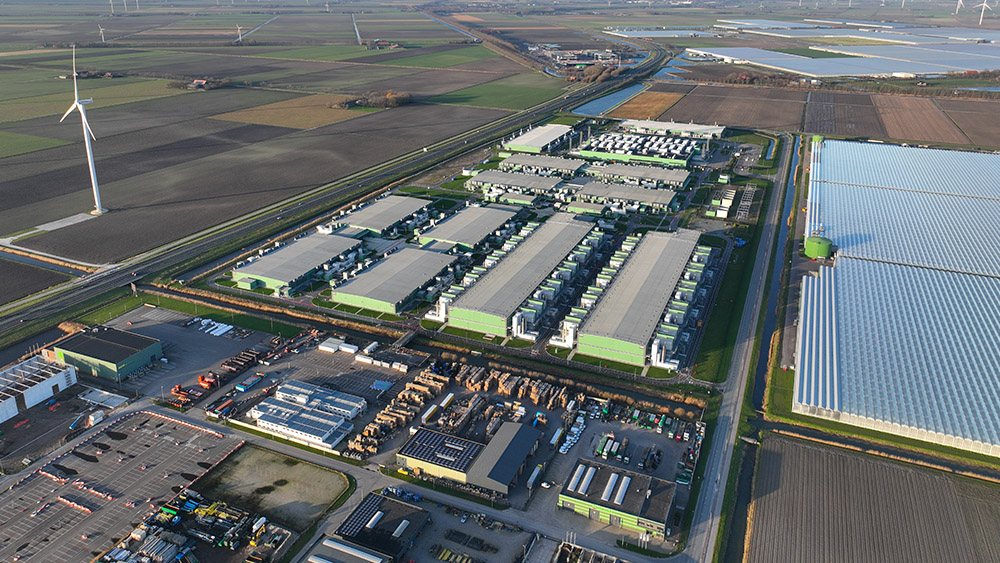
From semi-arid to Sahara: Scientists say this data center will trigger a climate catastrophe in Utah
05/11/2026 / By Willow Tohi
- The proposed Stratos Project in Box Elder County, Utah, would require 9 gigawatts of power—more than double the electricity used by the entire state—generating 16 gigawatts of thermal energy dumped into a single valley.
- Physics professor Robert Davies of Utah State University calculates the waste heat could raise local daytime temperatures by 5 degrees Fahrenheit and nighttime temperatures by up to 28 degrees.
- Ecology professor Ben Abbott of Brigham Young University warns the temperature shift could transform Utah’s semi-arid climate into conditions comparable to the Sahara Desert.
- The project, spearheaded by “Shark Tank” celebrity Kevin O’Leary, received county commissioner approval without public comment or environmental impact analysis.
- Scientists raise concerns about impacts on the already-collapsing Great Salt Lake ecosystem, including increased evaporation, dust pollution and destruction of wildlife habitat.
On May 7, Utah State University physics professor Robert Davies released calculations revealing that the proposed Stratos hyperscale data center in Box Elder County’s Hansel Valley would generate unprecedented thermal pollution capable of altering local climate patterns. The 40,000-acre project, championed by Kevin O’Leary of “Shark Tank” fame, and approved by county commissioners without public hearing, would consume 9 gigawatts of electricity from a natural gas pipeline crossing Wyoming to California. Davies determined the facility would actually produce 16 gigawatts of thermal energy, with waste heat from both power generation and computing operations concentrated in a single geographic basin at the northern edge of the Great Salt Lake—a watershed already in ecological collapse.
The physics of unprecedented heat
Davies described the scale as “challenging to get your brain around.” Any device consuming power simultaneously produces heat energy. For the Stratos Project, this means 7 to 8 gigawatts of waste heat from power generation combines with 9 gigawatts of heat from computing operations, all released into Hansel Valley.
The professor calculated this represents the thermal equivalent of approximately 23 atomic bombs deposited into the local environment every single day. Unlike typical waste heat that disperses across homes, businesses and roads far from power plants, the Stratos Project would concentrate this energy within its own geographic bowl.
Wei Zhang, a climate science professor at Utah State University and member of a national extreme heat panel, confirmed the heat could create an “urban dome” effect, potentially altering local wind patterns and storm systems. Even 3 to 4 degree temperature increases could trigger these circulation changes, Zhang said, though exact impacts require further study.
Desert ecology under threat
Ben Abbott, an ecology professor at Brigham Young University and executive director of Grow the Flow, reviewed Davies’ estimates and concluded the temperature shift would fundamentally alter the landscape.
“The difference between Utah’s semi-arid climate and the Sahara Desert,” Abbott said.
Evaporation would spike dramatically. The dewpoint could vanish entirely. These changes would devastate wildlife, plants and agricultural land owned by ranchers in the valley. Abbott suspects Hansel Valley would become another dust source along the Wasatch Front, joining the exposed, drying lakebed of the shrinking Great Salt Lake.
“We’re losing our wilderness in Utah,” Abbott said. “Not a wilderness designation, but open and wild spaces.”
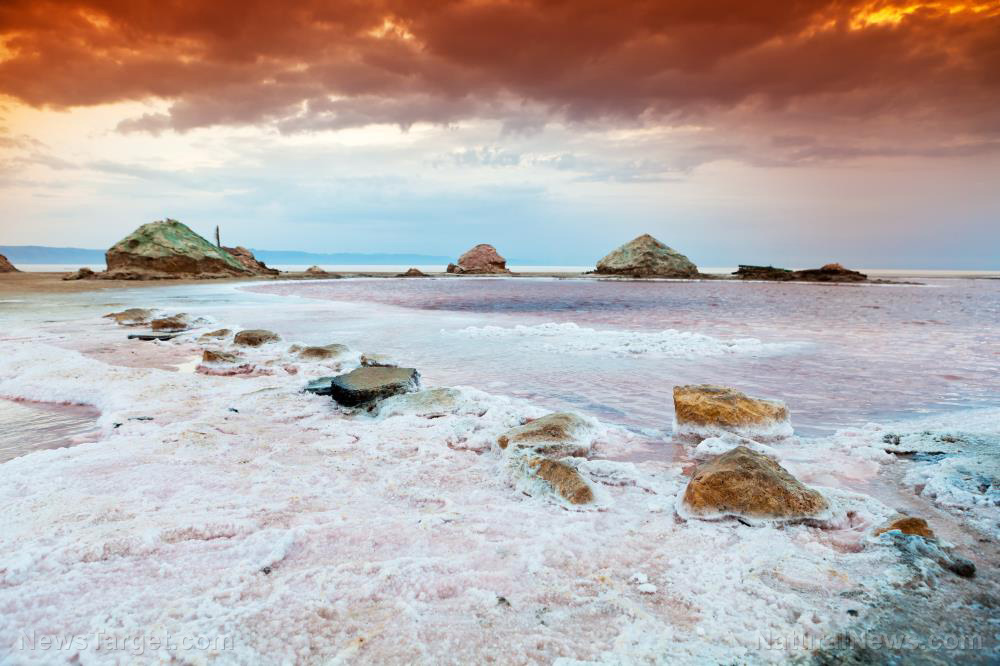
The Great Salt Lake faces collapse after decades of upstream water diversion. More than half its lakebed now lies exposed, releasing arsenic-laced dust threatening 2.5 million downwind residents. The lake hit another record low this year following dismal snowpack and unprecedented spring heat.
Unanswered questions and unknown technology
Box Elder County commissioners approved the project without hearing public comment, stating they had no “control” over environmental concerns like water supplies and air quality. Utah’s Military Installation Development Authority, Governor Spencer Cox and Senate President Stuart Adams have been vocal supporters.
Critical details remain secret, including what type of power plant O’Leary plans to build. Developers cite non-disclosure agreements and proprietary technology.
Davies suspects the project will use Allum-cycle energy production, a relatively new technology burning natural gas in pure oxygen to reduce certain pollutants. However, the primary byproducts—carbon dioxide and hot water at approximately 100 degrees Fahrenheit—present enormous challenges.
Cooling that water to temperatures safe for the Great Salt Lake ecosystem would require approximately 400 acres of industrial fans “blowing full tilt,” Davies estimated. The cheaper alternative—piping hot water into the underground aquifer—carries unknown but “extreme” ecological implications.
Historical context and broader implications
The Stratos Project represents a convergence of several alarming trends. The explosion of artificial intelligence and cloud computing demands unprecedented energy consumption, driving data center development at massive scales. Meanwhile, the Great Salt Lake’s collapse mirrors the fate of over 100 saline lakes worldwide, none of which any community has successfully restored.
Utah’s energy infrastructure already strains under data center demands. Patrick Belmont, a watershed sciences professor, noted the Stratos Project alone would emit more greenhouse gases than all cars, trucks, buses and motorcycles combined in the state. Robert Davies calculated the project would increase Utah’s total greenhouse gas production by approximately 50 percent.
The Homer City Energy Campus in Pennsylvania—a $10 billion transformation of a coal plant into a natural gas-powered data center—illustrates the national trend. Developers there tout 4.5 gigawatts of capacity while environmental groups raise concerns about fracking, water contamination and emissions.
A reckoning between progress and ecology
The Stratos Project forces fundamental questions about priorities in an era of climate crisis. Utah’s leaders champion economic development and technological advancement, yet scientists describe a facility that could transform local climate, destroy wildlife habitat and accelerate the Great Salt Lake’s collapse.
Abbott captured the trade-off directly: “When I think about what’s going to lead to intergenerational prosperity in Utah, it is not a data center, it’s the beauty of our landscapes.”
The project received approval without environmental impact studies, without public input and without transparent analysis of its technology. Davies’ calculations emerged only through independent academic effort, not official review. As Abbott noted, “If this is next-gen technology, share the data.”
Until that data emerges, the people of northern Utah face the prospect of a Sahara-like climate engineered in their backyard, while a dying lake—the largest saline lake in the Western Hemisphere—continues its slow disappearance, taking with it a way of life that sustained communities for generations.
Sources for this article include:
Submit a correction >>
Tagged Under:
big government, climate, climate science, Collapse, computing, cyber war, Dangerous, data center, disaster, Ecology, environment, future science, future tech, Glitch, information technology, inventions, progress, real investigations, research, utilities
This article may contain statements that reflect the opinion of the author
RECENT NEWS & ARTICLES